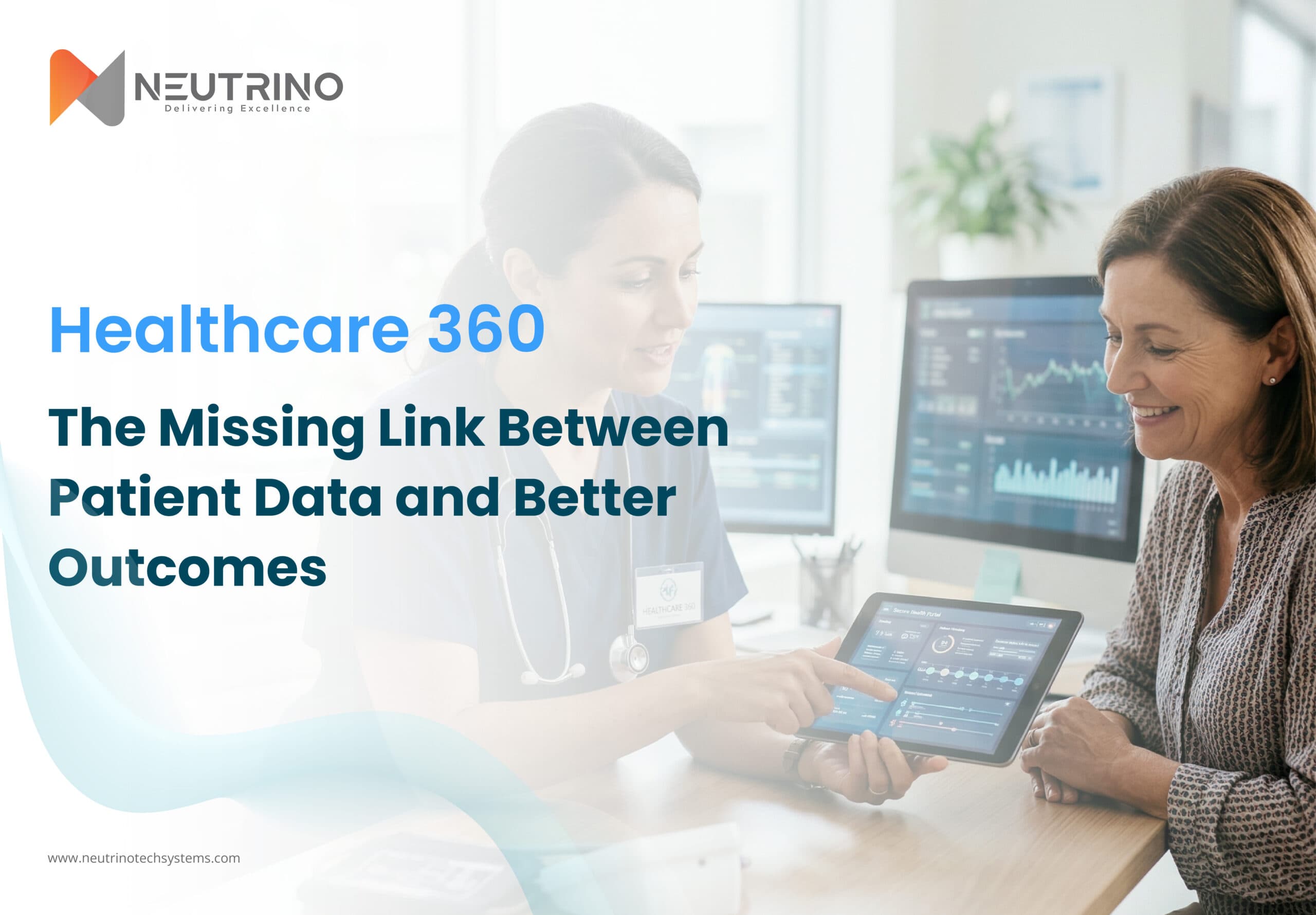
Healthcare has traditionally been shaped around key moments of care such as appointments, diagnoses, and treatments. But a patient's health story does not begin or end in these interactions. It unfolds continuously through medication patterns, clinical history, device data, and everyday engagement signals that often go unnoticed.
Why Patient 360 Is the Foundation for Healthcare 360
Artificial intelligence can unlock powerful insights, but its effectiveness depends on the quality, completeness, and connectivity of the data it analyzes. In many healthcare environments, patient information remains dispersed across clinical systems, pharmacy platforms, payer records, and digital health tools.
How AI Transforms Patient 360 into Proactive Care
When Patient 360 data is combined with AI capabilities, healthcare organizations can move beyond simply viewing patient information to actively interpreting it. Within a Healthcare 360 framework, AI can analyze patterns across clinical history, medication data, engagement signals, and operational workflows to surface insights.
Predictive models can identify patients at higher risk of complications before symptoms escalate, allowing care teams to intervene earlier. AI can also detect care gaps such as missed screenings or delayed treatments, ensuring that patients remain on track with recommended care pathways.
Enabling Healthcare 360 with Intelligent Platforms
While the potential of AI in healthcare is widely recognized, many organizations face challenges in translating data insights into real clinical and operational impact. Fragmented systems, disconnected workflows, and limited interoperability often prevent AI models from being effectively embedded into everyday care processes.
Wrapping Up
At Neutrino, we believe that building this intelligence layer requires more than advanced analytics. It requires strong engineering foundations that unify data, enable interoperability, and support real-time insights across the healthcare ecosystem. By combining AI driven platforms with robust data architecture, we aim to help organizations move from fragmented patient records toward truly intelligent, connected healthcare systems.