Insights
Engineering perspectives from inside Neutrino.
Loading the latest…
Loading the latest…
Blogs, whitepapers, the NextByte newsletter, Neutrino's Podcast, and e-books — engineering, healthcare AI, interoperability, and operational intelligence.
Healthcare-focused AI ecosystem for patient access, interoperability, workflow intelligence, and operational transformation — AccessHub, AccessFlow, AccessFabric, and the Payor Rules Engine.
srfrggt
wefwefe
zefefew
zcrefe
edede
sjiwjw
wxowdkwmwuehdue
owodd
kdoekde
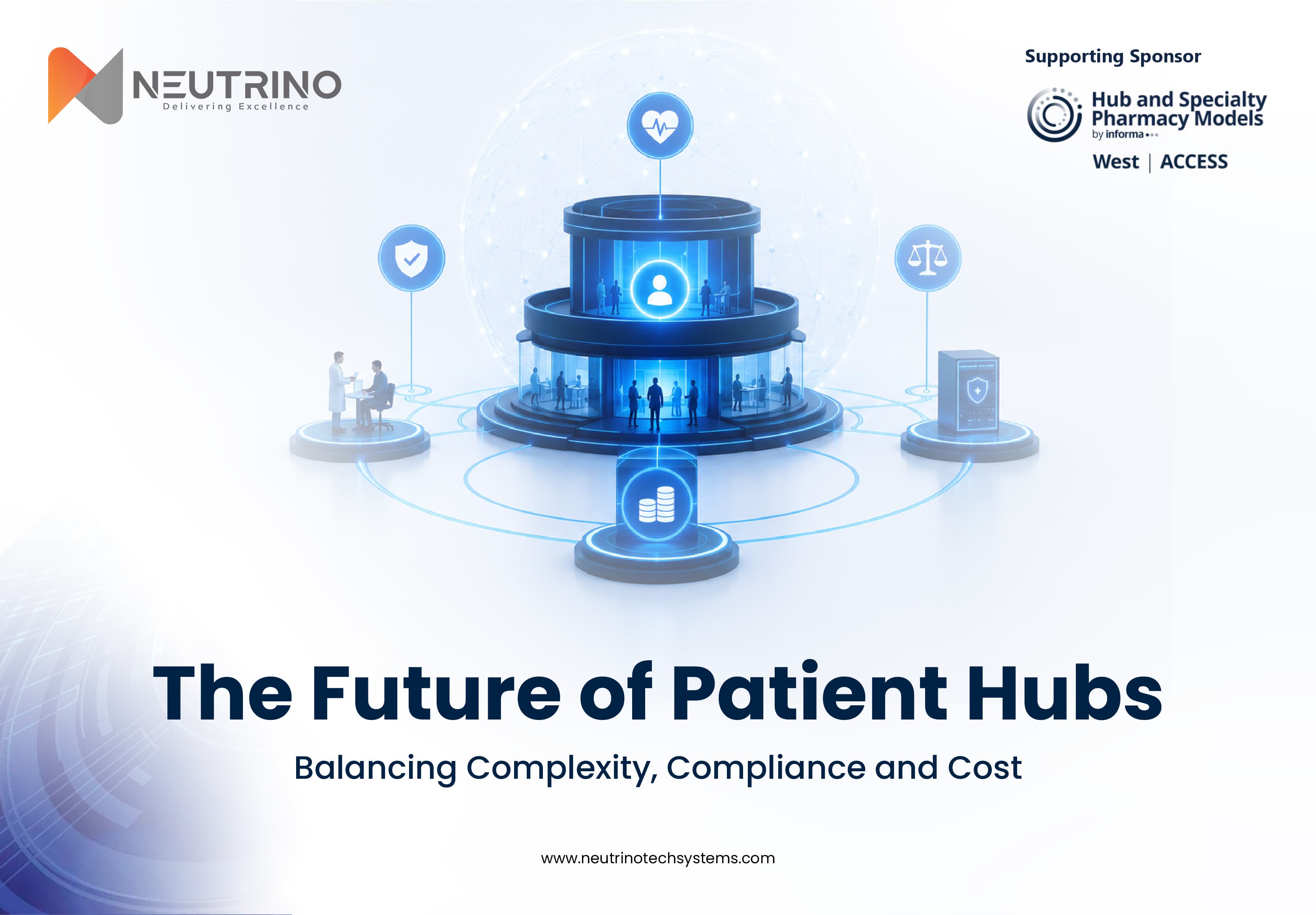
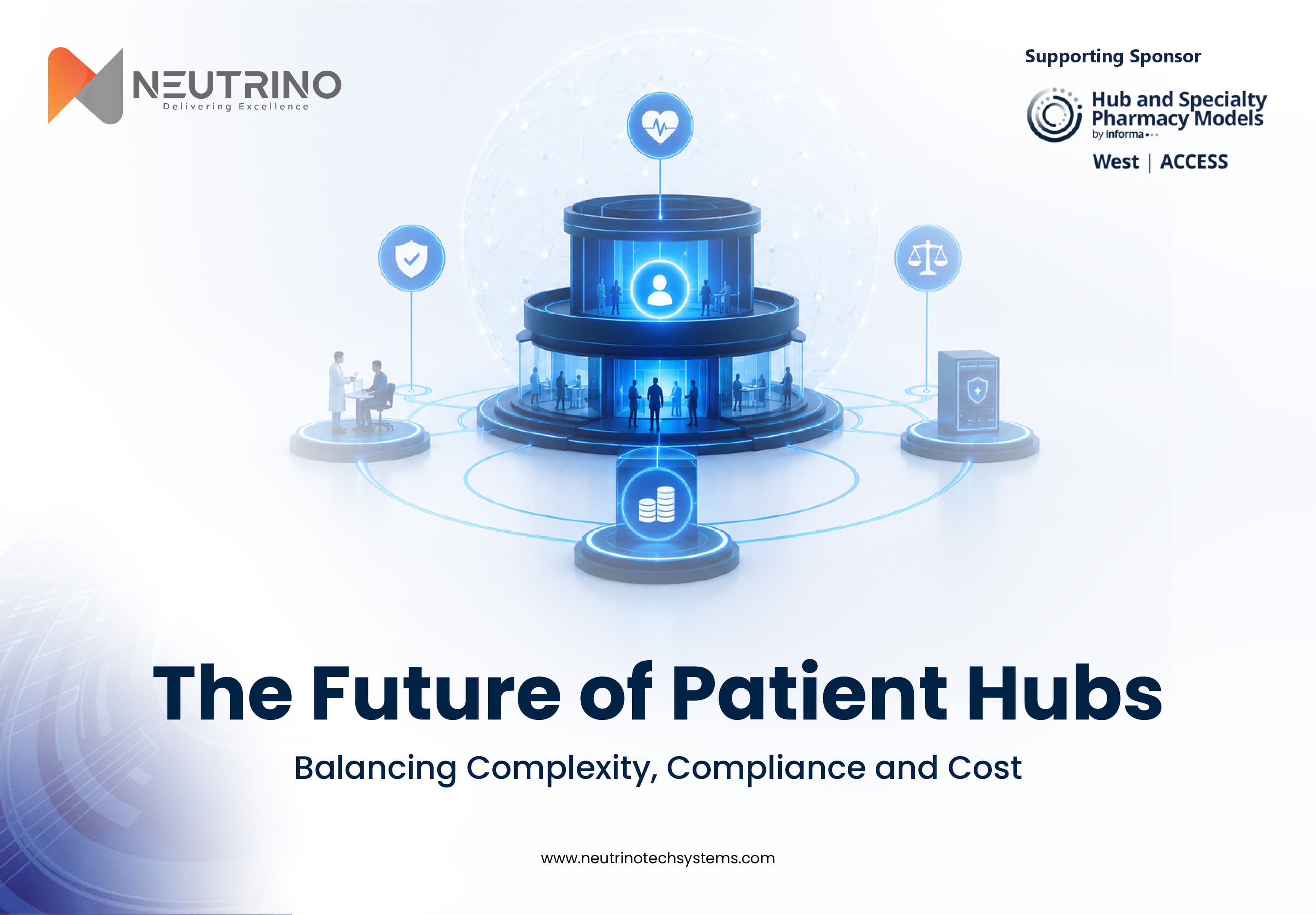
Patient hubs have evolved far beyond their traditional role of supporting reimbursement and access. Today, they serve as strategic touchpoints that connect manufacturers, providers, specialty pharmacies, payers, and patients to deliver a more coordinated care experience. As specialty therapies continue to grow and patient expectations evolve, hubs are expected to manage increasingly complex journeys while maintaining efficiency, ensuring compliance, and controlling operational costs.
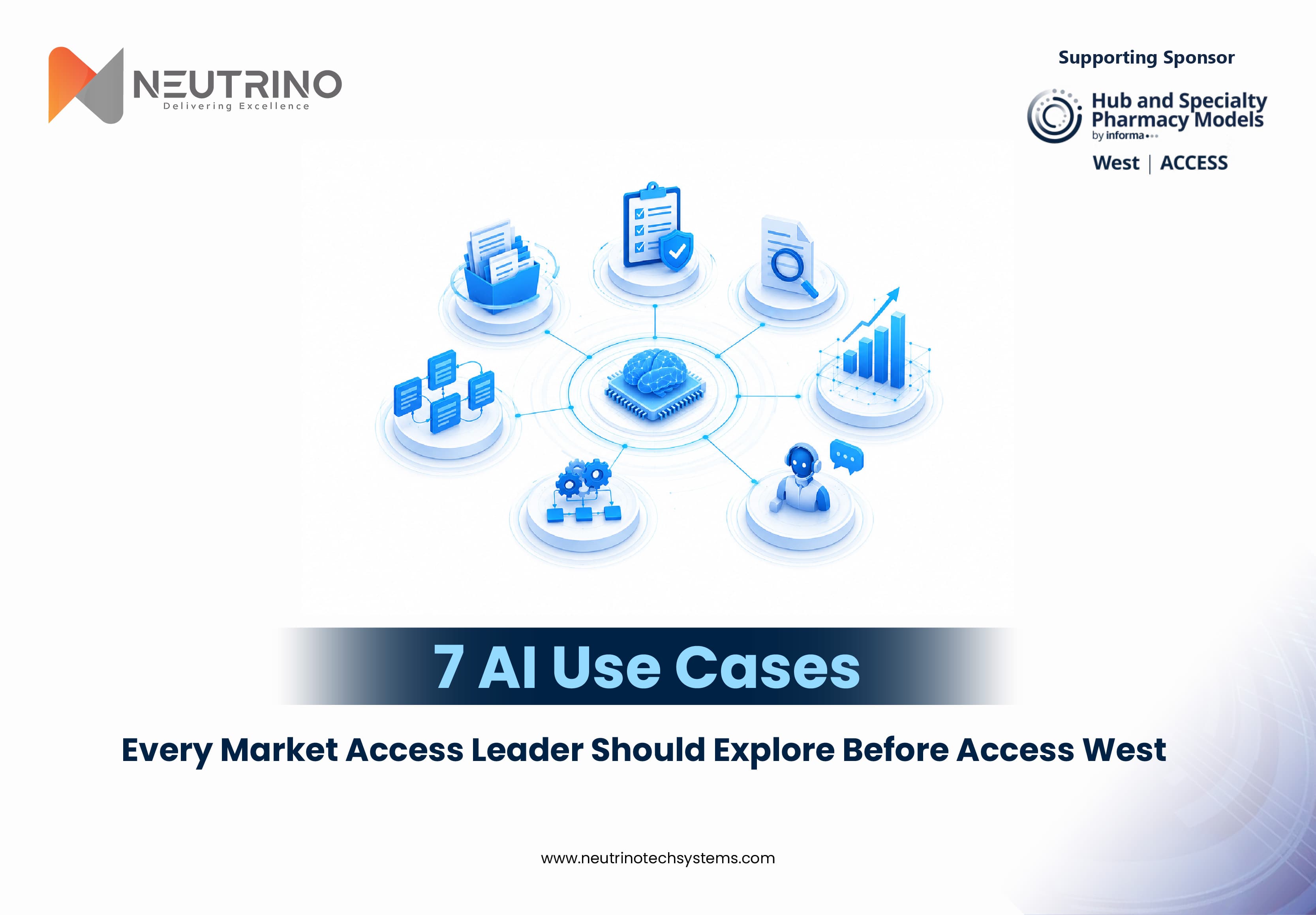
Market access has never been more complex. Rising administrative workloads, evolving payer requirements, and increasing pressure to accelerate patient access are pushing healthcare organizations to rethink how they operate. [According to an analysis of U.S. drug launches](https://www.deloitte.com/us/en/insights/industry/life-sciences/pharmaceutical-market-access.html?utm_source=chatgpt.com), 57% of launch failures are attributed to limited market access, underscoring how access strategy has become a defining factor in commercial success. While automation has helped streamline routine tasks, Artificial Intelligence is enabling a new level of transformation by helping systems understand, analyze, and support decision making across the entire market access journey.

With immense success of GITEX in the Middle East, the global tech world awaited an exhilarating and most anticipated debut. GITEX ASIA — Asia's Largest & Most Global Tech, Startup & Digital Investments Event — made a stunning touchdown in the new tech powerhouse: Singapore. This was not just another international tech exhibition, but a strategic leap into the most promising and future-orientated economies of the world.
In a world where change is the only constant, pharmaceutical companies are on the verge of a massive revolution. Driven by digital transformation in pharma, the sector is discovering new methods to care for patients, strengthen patient relationships, and advance medicine. The goal is to make healthcare more personal, accessible, and meaningful for everyone.

A single missed dose can compromise a patient's treatment and affect adherence to their care plan. A delayed shipment of surgical tools can disrupt critical procedures. Running out of essential drugs can put lives at serious risk. In the United States, healthcare supply chain management inefficiencies account for nearly 30% of hospital expenses, costing the industry over $25 billion annually, according to a source.
What if your AI assistant could do more than respond to commands? What if it could anticipate your needs and take action independently? Modern businesses need nimble, hassle-free solutions that simplify operations and accelerate outcomes. Picture a scenario where, instead of just sending a meeting reminder, the system reschedules it based on participants' availability, books transportation, and shares relevant materials with the team in real time. This is no longer a concept for the future. Agentic AI is already making this level of intelligent automation a reality for modern enterprises.
A customer reaches out with a query, and an AI assistant promptly responds with the right information. In another scenario, an AI system identifies a supply chain delay, reroutes deliveries, updates internal systems, and alerts the team, all without manual intervention. These scenarios aren't futuristic; they reflect the real-world impact of Generative AI vs Agentic AI, two fundamentally different approaches to AI already at work today.
For years, JD Edwards was the dependable workhorse of the enterprise world, reliable, structured, and dressed in the digital equivalent of a suit and tie. It powered finance, manufacturing, and supply chain operations with the steady rhythm of a legacy ERP system. But as the business landscape evolved, driven by cloud computing, automation, and AI, those classic systems started showing their age.
Even the best healthcare fails when a patient discontinues treatment midway. As per the WHO, despite advances in access and affordability, nearly 50% of patients with chronic conditions don't adhere to their prescribed medications and therapies. The consequences ripple across the system, including worsening health, preventable hospitalizations, and an estimated $500 billion in annual global healthcare costs tied to non-adherence, according to a report.
In a world where digital convenience shapes every experience, healthcare can no longer afford to lag behind. Today's patients expect the same level of access and responsiveness from their care providers as they do from banks, retailers, or travel platforms.
Imagine being prescribed a life-saving, high-cost therapy only to be stuck in red tape. Specialty pharmacies manage high-cost, high-touch medications for complex, chronic conditions like cancer, MS, and rheumatoid arthritis. Yet the specialty journey is often fragmented: prescriptions bounce between faxes, phone calls, and siloed systems, resulting in delays, opacity, administrative fatigue, and even worse patient drop-offs.

While JD Edwards 9.2 represented the start of a broader digital reinvention, it's JD Edwards Orchestrator that truly runs the show behind the curtains. This no-code automation tool connects processes, APIs, and notifications, making real-time integration and adaptability possible without extensive development.

As leaders at the intersection of Healthcare & Tech, we're gearing up for GITEX Global 2025, the world's largest tech event, taking place 13–17 October 2025 across the Dubai World Trade Centre and Dubai Harbour. AI is the backbone of digital transformation, reshaping industries from healthcare and finance to manufacturing and mobility. Every conversation today circles back to AI: how it's redefining diagnostics, streamlining supply chains, creating intelligent enterprises, and unlocking new economic frontiers.
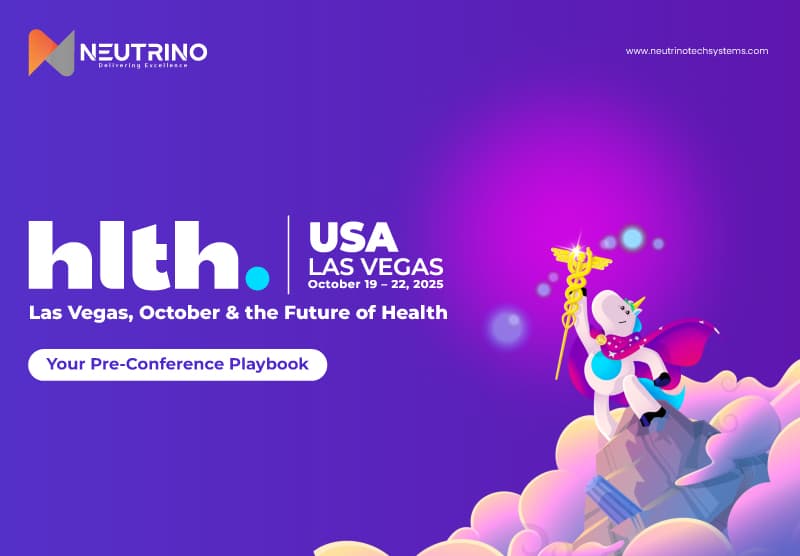
HLTH USA 2025, the industry's most influential healthcare innovation gathering, takes place October 19–22 at The Venetian Expo Center in Las Vegas. With over 12,000 attendees, 2,750+ CEOs, 400+ speakers, and 900+ sponsors, it remains one of the most anticipated events in healthcare.
In 2025, specialty drug spend is projected to account for more than 50 percent of the total U.S. pharmacy spend, according to the Drug Channels Institute. Yet, behind this growing investment lies a troubling reality: many specialty pharmacies still rely on manual workflows that slow care, create friction, and put patient outcomes at risk. In an industry where each prescription may represent a life-altering therapy, inefficiencies are more than operational challenges. They can mean delayed treatments, mounting stress for patients, and lost opportunities for better health outcomes. Digital transformation in specialty pharmacy has often focused on the headline innovations like EHR integration and electronic prior authorizations.
AI Engineering is evolving at an unprecedented pace, transforming skills, workflows, and industry expectations. What began with traditional rule-based systems advanced through machine learning and deep learning, and is now entering the era of agentic AI, where systems make autonomous decisions and adapt in real time.
In the world of healthcare, specialty pharmacy operates at the intersection of critical patient care and immense operational complexity. Each prescription can represent a life-changing therapy, but a maze of administrative hurdles, from prior authorizations to financial assistance, often stands in the way. At HLTH Las Vegas, we're showcasing how Neutrino is changing this narrative, transforming complex workflows into seamless, patient-centered journeys.
GITEX Global 2025, the world's largest tech and startup show driving transformation across future-critical sectors is here. Transformative health tech solutions were at the heart of conversations at GITEX Global in 2024. This year, the event promises to be bigger, and showcase innovations that transform. Neutrino Tech Systems is enroute Dubai to reconnect with familiar faces, strengthen existing partnerships, and collaborate with industry mavericks to usher in the next wave of transformation.
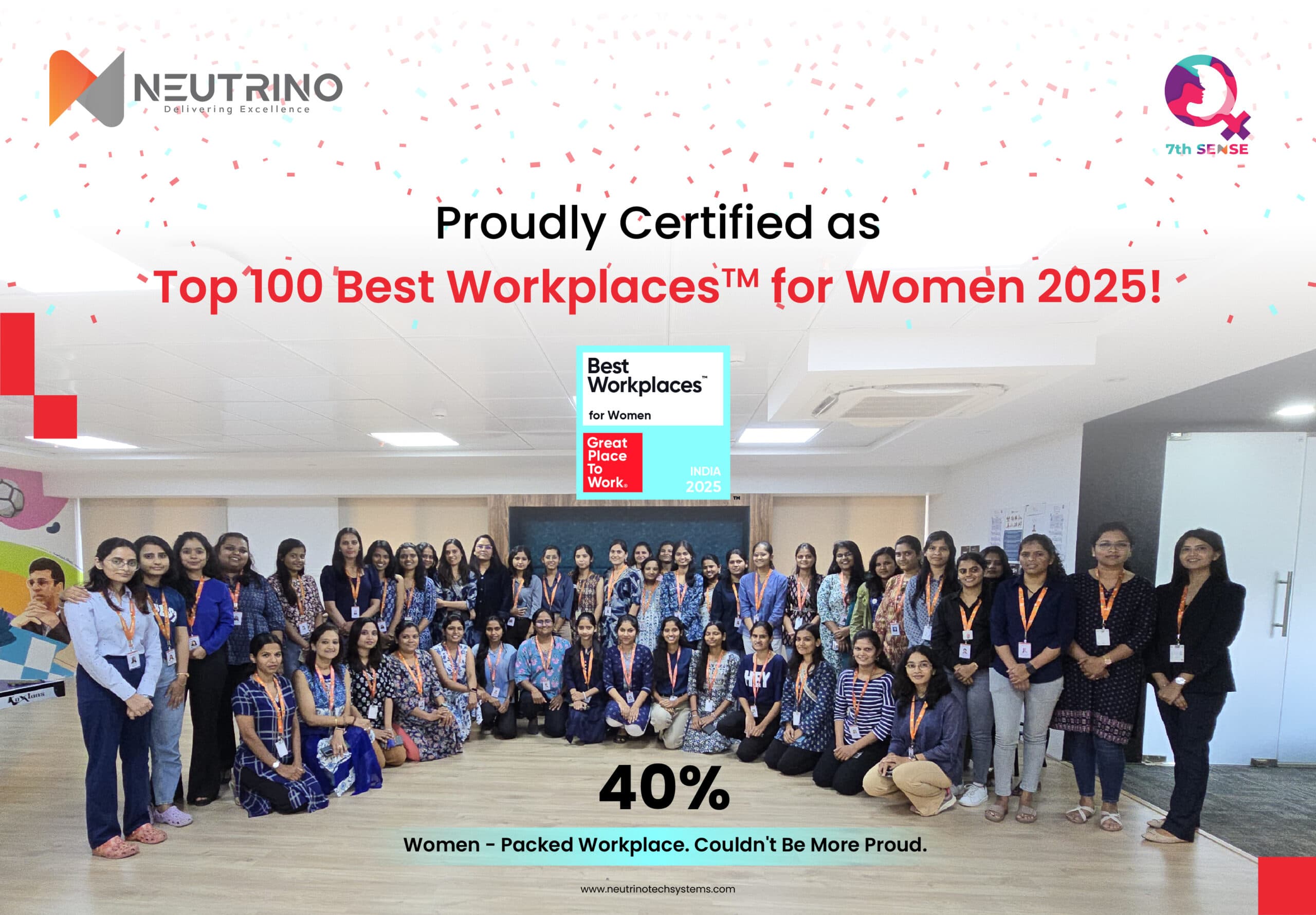
This year marks a proud milestone for Neutrino as we are recognized among the Top 100 Best Places to Work for Women 2025. At Neutrino, we have always believed that a workplace becomes truly great when it empowers everyone to grow, contribute, and belong. For three consecutive years, we have been recognized as a Great Place to Work, and each recognition has reaffirmed that our culture of trust, collaboration, and inclusivity is moving in the right direction. This latest achievement is not just a badge of honor; it is a reflection of the values we live by every day and our unwavering commitment to creating a workplace where women thrive.

The lights have dimmed, the halls have emptied, and the collective buzz of the world's largest tech summit now echoes only in our memories. GITEX Global 2025 was the landmark 45th edition and a truly profound convergence of human ambition and technological possibility. Significantly, this was the final year the event was hosted at its long-time home, the Dubai World Trade Centre (DWTC). The move, driven by the need for expansive infrastructure to support the rising scale of global AI and tech economies, will see the event relocate to the Dubai Exhibition Centre, Expo City Dubai, starting in 2026, marking a new chapter dubbed 'GITEX TechCation' that integrates technology with the city's lifestyle and tourism season. This five-day event was a powerful testament to the fact that innovation, at its core, is a deeply collaborative, intensely human endeavor.
Prior authorization was designed to ensure appropriate, cost-effective care, but in reality, it has become one of the biggest pain points in healthcare delivery. With the rise of AI-Powered Prior Authorization, there is now a growing push to address these long-standing inefficiencies.
The silent epidemic of non-adherence is estimated to cost the U.S. healthcare system alone nearly $300 billion annually and leading to countless preventable hospitalizations and worse health outcomes. The failure of traditional adherence methods is not a failure of effort, but a failure of insight. Treating non-adherence as a simple forgetfulness issue ignores the underlying behavioral, financial, and psychological factors. It is a massive, multi-faceted challenge that can only be solved by technology capable of analyzing billions of data points to understand the most complex variable in healthcare: the individual patient. Now, a new contender has emerged, promising to disrupt this stagnation: Artificial Intelligence. From predictive algorithms that identify at-risk patients to conversational AI patient adherence solutions integrated into mobile apps, the technology promises to finally crack the adherence code.
Today, the healthcare space is standing at a breaking point more than ever. Hospitals worldwide are overwhelmed with rising patient volumes, administrative overload is consuming more clinician time than care itself, and data is multiplying faster than teams can process it.

Neutrino Tech Systems recently participated in HLTH USA in Las Vegas, joining the broader health ecosystem — providers, payers, employers, life sciences, and innovators — to focus on smarter, more connected care.
AI in clinical trials is advancing at breakneck speed, yet a hard truth remains: most healthcare systems aren't architecturally ready for it. While healthcare systems continue to invest in LLMs, generative AI, and predictive analytics, most organisations are discovering that innovation alone is not enough.
AI trends in healthcare are approaching a pivotal moment in 2026, marked less by experimentation and more by real-world execution and accountability. Intelligence is increasingly embedded within everyday clinical and operational workflows, often operating quietly but delivering measurable impact.

Around the world, healthcare systems are under pressure to deliver better care to more people, faster, safer, and more equitably than ever before. As artificial intelligence, digital platforms, and data-driven care models accelerate, the real question is no longer whether healthcare can evolve, but how responsibly, ethically, and sustainably that evolution is shaped. This is where WHX 2026 matters. The event is expected to welcome over 4,800 exhibitors and over 270,000 visitors from over 180 countries.
A single recommendation can change the course of a cancer patient journey. It can shape hope, uncertainty, and the decisions patients and clinicians carry forward together. Yet despite rapid advances in artificial intelligence, trust remains fragile.
Formerly known as Arab Health, WHX 2026 Dubai has long been one of the most influential global platforms for healthcare innovation. This year, it felt bigger than an exhibition. It felt like a convergence point for the future of healthcare.
HIMSS25 did not feel like a conference centered on future possibilities. It felt like a summit focused on execution. The language across sessions reflected a healthcare industry that has moved past digital curiosity and into digital accountability. Innovation is no longer measured by ambition alone, but by implementation, governance, and outcomes.
HIMSS 2026 is set to bring the global healthcare community together from March 9–12, 2026, in Las Vegas, Nevada. Hosted every year by HIMSS, this flagship healthcare technology conference attracts providers, payers, health systems, policymakers, and digital health innovators from around the world.
Healthcare generates enormous volumes of patient data across electronic health records, pharmacy systems, insurance claims, and connected devices. Yet much of this information remains dispersed across disconnected platforms, making it difficult for care teams to see the complete patient journey.
Healthcare has traditionally been shaped around key moments of care such as appointments, diagnoses, and treatments. But a patient's health story does not begin or end in these interactions. It unfolds continuously through medication patterns, clinical history, device data, and everyday engagement signals that often go unnoticed.

Managing a long-term condition can often feel like trying to piece together a puzzle without ever seeing the full picture. Medications, consultations, follow-ups, and daily decisions all play a role, yet they rarely come together in a way that feels connected or continuous. Over time, this lack of cohesion can make care feel more complex than it needs to be. This is where chronic care management becomes essential, not just as a clinical function, but as a way to bring clarity, coordination, and continuity to ongoing patient journeys.
Being at Asembia 2026, what stood out was not just what was presented but what was openly acknowledged. In conversations across the floor, there was a noticeable shift from showcasing progress to questioning what is still not working.
Quality today is not defined by how fast organizations test, but by how confidently they deliver. As enterprises race toward continuous innovation, the need for intelligent, scalable, and automation-first quality engineering has never been greater. This is where the strategic partnership between Neutrino Tech Systems and Tricentis comes into play. More than a collaboration, this partnership represents a strategic transformation toward next-generation Quality Engineering, driven by intelligent automation and platform-led delivery.
Specialty therapies are advancing at an unprecedented pace, reshaping treatment across oncology, autoimmune disorders, and rare diseases. Yet while healthcare innovation continues to accelerate, patient access remains trapped within fragmented administrative systems. The growing burden of specialty pharmacy prior authorization is causing treatment delays driven by disconnected workflows, repeated documentation, and inefficient approval processes.